Final Year Project - Project Huia
UC Aerospace capstone: a modular high-speed fixed-wing UAV development platform.
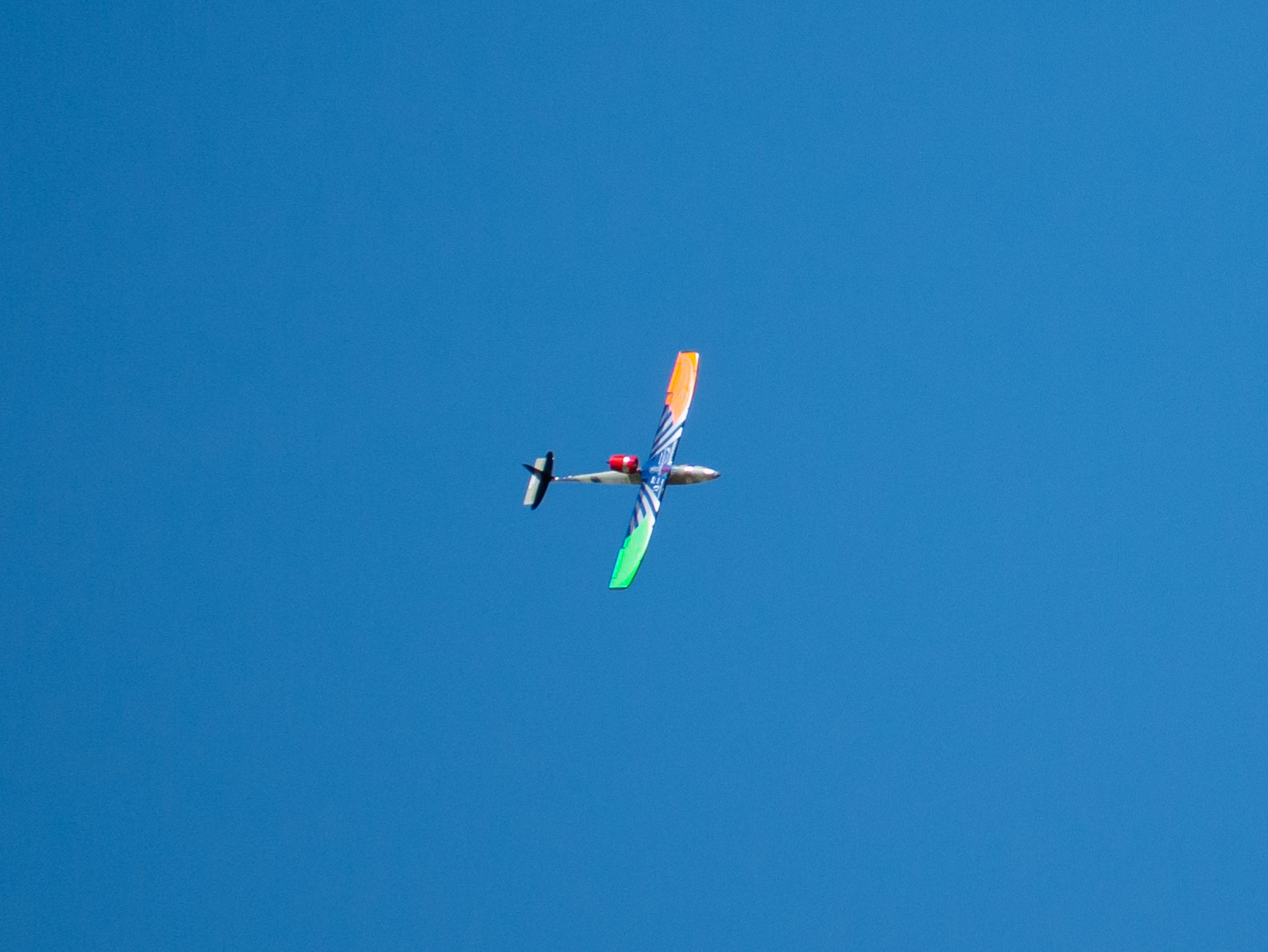
Project Huia-Controls was one of three major capstone projects completed by the University of Canterbury Aerospace Club in 2026. The project was divided into two teams, Structures and Avionics/Controls, working towards the shared goal of developing a modular aircraft platform that future teams can use to test different designs and configurations. The eventual aim is to challenge the current EDF-powered UAV speed record of 495 km/h.
On October 25th, Project Huia reached a major milestone with its maiden flight at Burnham Field, reaching a top speed of 202 km/h and remaining airborne for 3 minutes and 44 seconds. Considering that the composite aircraft was designed, manufactured, assembled, and flown within a single year, this was a fantastic achievement for both teams.
My Role
My primary contributions were the development of a six-degree-of-freedom (6DOF) flight dynamics model in MATLAB and Simulink, autopilot integration and testing, and work on control surface sizing and specifications.
6-DOF Flight Dynamics Model
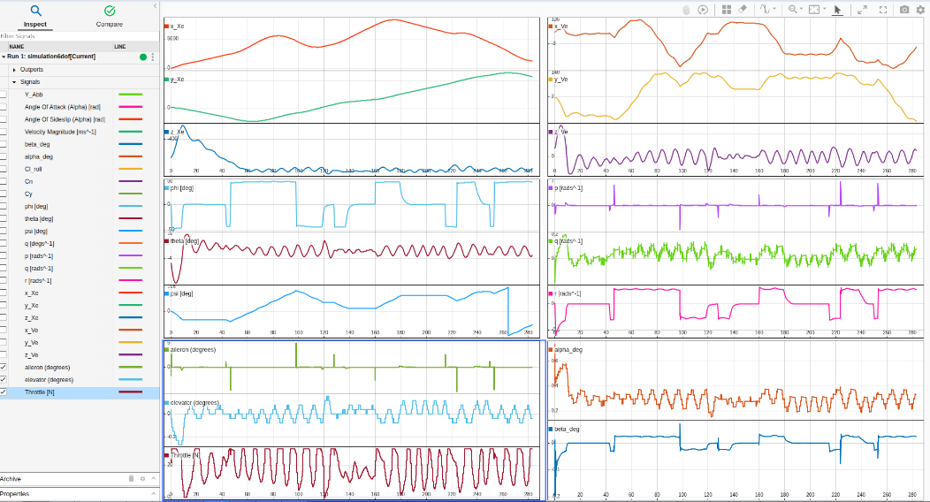
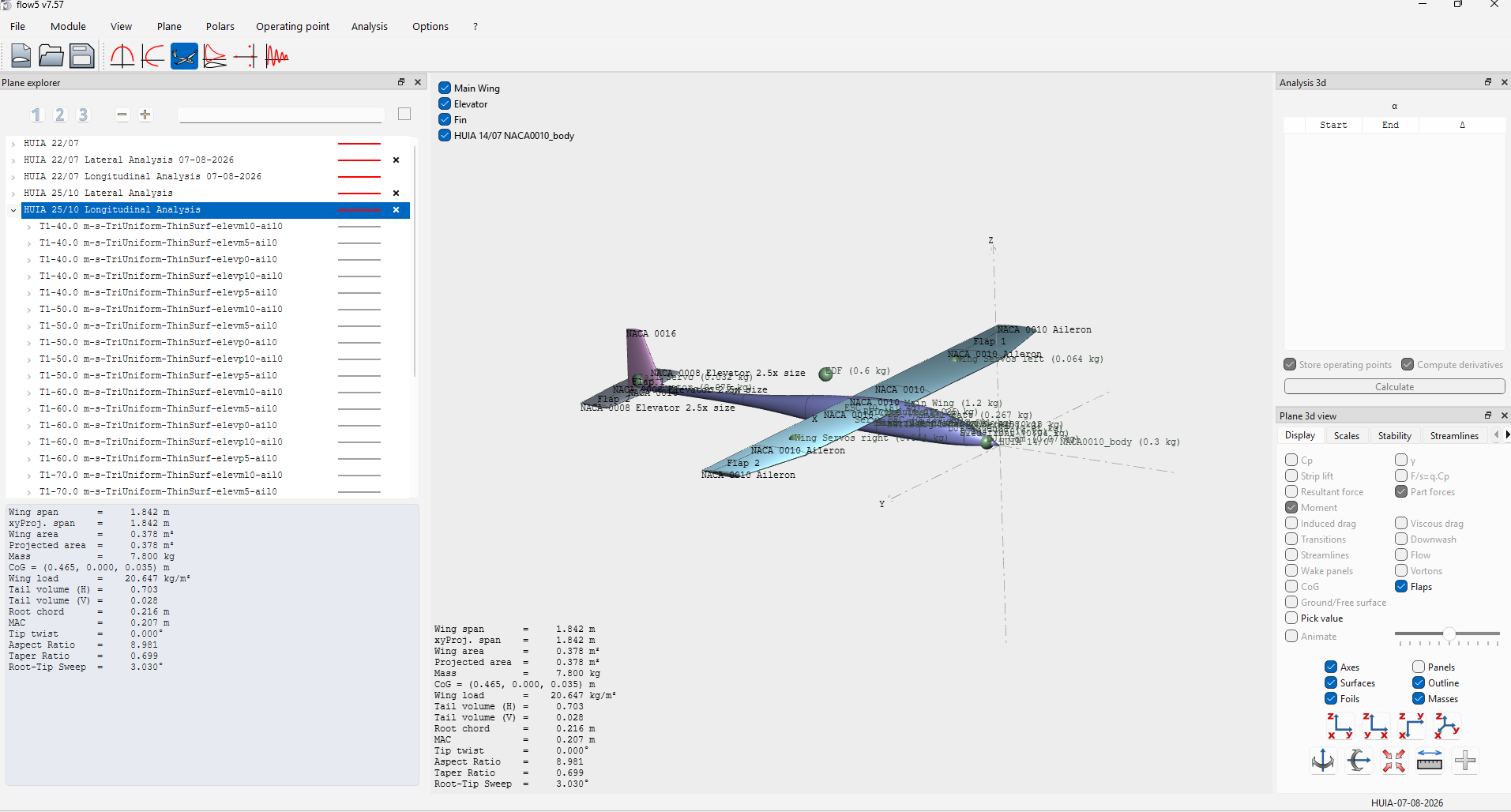
The simulation models the aircraft's aerodynamic forces and moments, propulsion, gravity, and physical properties to reproduce its flight behaviour. As the aircraft design evolved, I developed automated tools for regenerating the aerodynamic coefficients so the model stayed in step with the latest geometry.
Software-in-the-Loop Simulation
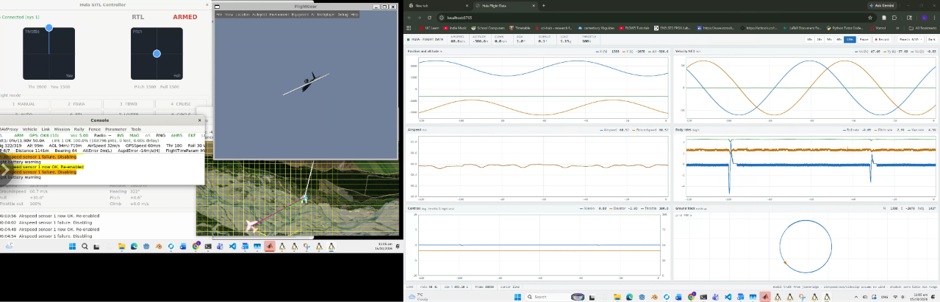
I integrated the simulation with ArduPilot through a software-in-the-loop (SITL) interface, allowing the flight controller to be tested and evaluated in a simulated environment before any physical flight testing.
Model Validation
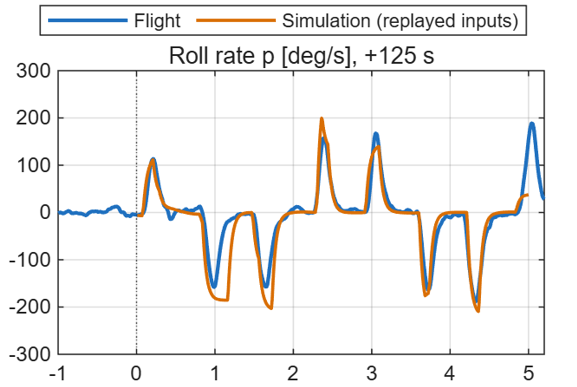
The model was validated against wind-tunnel measurements and real flight data collected during the maiden flight. Replaying the recorded control inputs through the simulation reproduces the measured roll response closely.
Reflections
The project has been a fantastic learning experience, particularly in flight dynamics, simulation, control systems, and simulation validation. It also gave me the opportunity to independently develop a GN&C simulation and testing framework from the ground up. After a year of development and testing, seeing Huia finally take to the air was incredibly rewarding, and I'm excited to see where future teams take the platform.
A huge thank you to everyone who helped make Project Huia possible, especially the rest of the team and project supervisors.